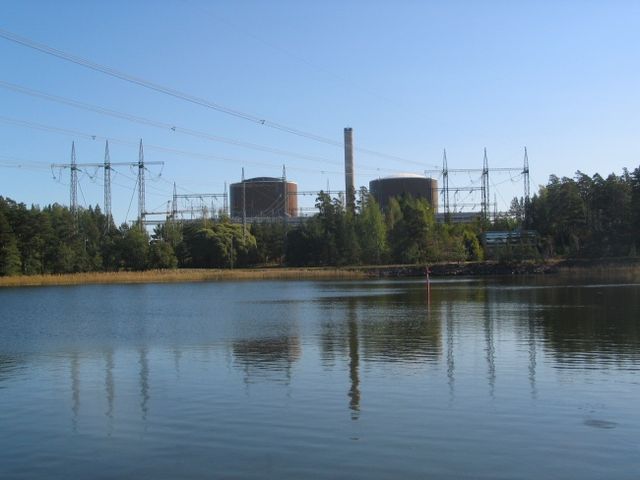
Participation of NTW regarding the Lifetime extension of the Loviisa’s Nuclear Power Plant (Finland)
Prevent and anticipate through transparency and participation
“In order to meet the EU’s climate and energy targets for 2030 and reach the objectives of the European green deal, it is vital that EU directs investments towards sustainable projects and activities. This is achieved by the action plan on financing sustainable growth called for the creation of a common classification system for sustainable economic activities, or an “EU taxonomy”. The Taxonomy Regulation, published in the Official Journal of the European Union on 22 June 2020, establishes the basis for the EU taxonomy by setting out 4 overarching conditions that an economic activity has to meet in order to qualify as environmentally sustainable.
Under the Taxonomy Regulation, the European Commission had to come up with the actual list of environmentally sustainable activities by defining technical screening criteria for each environmental objective through delegated acts. A first delegated act on sustainable activities for climate change adaptation and mitigation objectives was adopted on 4 June 2021. Already in 2020 the EC launched in-depth work to assess whether or not to include nuclear energy in the EU taxonomy of environmentally sustainable activities. As the first step, the Joint Research Centre drafted a technical report on the ‘do no significant harm’ aspects of nuclear energy. This report has been reviewed by two sets of experts, the Group of Experts on radiation protection and waste management under Article 31 of the Euratom Treaty, as well as the Scientific Committee on Health, Environmental and Emerging Risks on environmental impacts. It is planned to publish a second delegated act for the remaining objectives soon.
It is in this context that NTW has written this open letter to the Commission to ask when and how citizens will be consulted on whether or not to include nuclear energy in the European Taxonomy. »
The seminar on Nuclear energy and the EU sustainable finance taxonomy took place on April 14th 2021. It was co-organized by the European Parliament and Nuclear Transparency Watch.
Nuclear energy is pushed forward from several sides as one of the technologies to be included in efforts to combat the climate emergency. It is argued that in order to help overcome its difficult market position, nuclear energy should be included in the EU Sustainability Finance Taxonomy. The Technical Expert Group for the preparation of the EU Sustainable Finance Taxonomy excluded nuclear energy on the basis of the Do No Significant Harm (DNSH) principle. This seminar wants to share viewpoints on the position of nuclear energy vis-à-vis the Taxonomy, and to explore ways in which transparency of a decision for or against inclusion can be increased.
Moderator: Patrizia Heidegger, European Environmental Bureau
Speakers:
– Claude Turmes, Minister of Energy of Luxembourg
– Wendel Trio, CAN Europe
– Ben Wealer, University of Berlin
Other EP-NTW organized seminars are planned to be held in autumn, on topics such as the costs of nuclear energy, hydrogen, and the Energiewende.
From Peter Mihok, member of NTW.
As the NTW informed on 12 May 2020 via Twitter and a new website item [1], both linking to the original factsheet prepared by its Slovak member [2] (note: the current updated factsheet is here [3]): for more than a decade, there exist crucial concerns with regard to public access to nuclear sector related information in Slovakia. This is due to an interplay between many controversial amendments of Environmental Impact Assessment (EIA) Act, Freedom of Information Act (FOIA), Atomic Act and other related acts, adopted since 2009. In the cumulative effect of all these amendments, the Slovak Nuclear Regulatory Authority (NRA) was provided with a new legal right to consider the complete content of nuclear sector documents as confidential, since 1 May 2010.
The above referred Slovak law amendments became subject of UNECE Aarhus Convention Compliance Committee (ACCC) scrutiny [4]. Originally, this was due to a dispossession of NGOs of their formal legal standing status in EIA procedures (appealed at the ACCC by the Austrian NGO GLOBAL 2000 / Friends of the Earth Austria on 28 July 2009 [5]).
Peter Mihók, the Slovak NTW member, explained in the two academic journal papers [6] that the introduction of a flat‑rate non‑transparency concerned particularly and only nuclear sector related information. Furthermore, he explained that the introduction of this flat-rate non‑transparency was a direct response of the Slovakian authorities to the outcomes of EU infringement procedure regarding non‑compliance of the Slovak EIA Act with the EU AIA Acquis (i.e. a very similar non‑compliance as the ACCC submission/case from 2009 referred in the paragraph above).
Some/relevant of the above referred laws have been “softened” here and then in 2011 – 2018, in order to “soften” the clauses that allowed flat-rate classification of documents/information related to nuclear sector as secret/confidential/classified. This was a consequence of the below referred findings about relevant Slovakia’s laws’ and legal documents’ non compliance with the Aarhus Convention in particular with regard to lacking public access to nuclear sector related information/documents. Due to a combination of a rather high number plus a rather lengthy and complicated nature of these ‘softening law amendments’, it was not possible for the Slovak and/or other relevant NTW member(s) to dealt with this topic, i.e. to a lack of capacities to deal with such a ‘legally expert topic’. The bottom line here is that Slovakia was unable to transpose the Aarhus Convention into its national legislation on public access to nuclear sector related information/documents for more than a decade.
Moreover, as explained in the updated NTW factsheet [7], the Slovak parliament approved another controversial FOIA amendment in 2019. This provided for yet more reasons to classify information/documents falling under the Slovak Atomic Act as confidential. This amendment extended possibilities to justify non‑transparency by banking secrecy, telecommunications secrecy, and/or postal secrecy. This became a subject of further UNECE ACCC scrutiny, under the procedure which concerned the decision VI/8i adopted by the Meeting of Parties to the Aarhus Convention at its sixth session [8], and which formally (re‑)started on 14 September 2017 [9].
Following more than a decade of disrespect to the Aarhus convention, several Slovakian activists joined their forces, and prepared the three different submissions to the Slovak authorities in August – October 2020, all of them focused on Slovakia’s non‑compliance with the Convention with regard to nuclear sector related information/documents and/or project permit procedures.
Following the official information about plans of the Ministry of Justice (MoJ) to amend FOIA [10] (in order to transpose the EU Directive 2019/1024 from 20 June 2019 [11]), the Slovak NTW member Mr. Peter Mihók, together with the Slovak activist in radioactive wastes related issues Mr. Michal Daniška, submitted an official impetus to the MoJ [12] under the Slovak legal framework to influence preparation of laws/law amendments on 3 August 2020. In this impetus, they reminded the MoJ about the item 11 on p. 109 of the (pre‑)election program document of the Slovak Government current leading political party ‘OĽaNO’ [13] about ‘bringing an era of a flat rate non transparency of commercial nuclear sector information to an end’. In a justification of a relevancy of their impetus, they referred also to the Second ACCC progress review from September 2019 [14], by means of which the ACCC confirmed that it considered Slovakia not yet fulfilling the requirements of the above referred (and linked) Decision VI/8i.
In parallel to the activity referred in the paragraph above, the two Slovak lawyers – Ms. Dana Mareková (as a citizen of Slovakia, affiliated with the Austrian NGOs Global 2000 a Wiener Plattform Atomkraftfrei), and Mr. Peter Wilfling (NGO Via Iuris), prepared a detailed legal analysis of Slovakia’s non‑compliance with the Aarhus Convention with regard to nuclear sector related information/documents and permit procedures. In a form of a letter to the State secretary of the Ministry of Environment (MoE) Mr. Smatana [15] (CC: Minister of Justice Ms. Kolíková, and State secretary of the Ministry of Economy Mr. Galek), this legal analyses was sent to all the three relevant Slovak Ministries on 22 September 2020. This submission also requested to remove legislative and application barriers in the application of the Aarhus Convention in relation to a nuclear sector in Slovakia. This submission was also signed by the Slovak NGOs CEPTA and Via Iuris, the Slovak office of Greenpeace CEE, the Slovak Civic Initiative We want a healthy country, and also by Mr. Peter Mihók (the Slovak member of the NTW).
Without any relation to the above referred letter, on the same day, the Environment Minister Mr. Budaj informed at a press conference that also the monitoring committee of the Council of the European Union has approached Slovakia in relation to a potential non‑compliance with the Aarhus Convention specifically with regard to the nuclear sector information (see for ex. the TASR press release [16]).
On 1 October 2020, the Slovak members of the EURAD Civil Society Larger Group (Mr. Mihók and Mr. Daniška) submitted an official proposal to the MoJ[17]. In this submission, they requested the MoJ to amend the FOIA in a way revoking all the relevant FOIA amendments from 2010 – 2019 by means if which a flat-rate non‑transparency of commercial nuclear sector information has been introduced/expanded in the relevant Slovak laws. This proposal was supported (also signed) by the 32 members of the informal Slovak association of environmentalists [18].
Also on 1 October 2020, Mr. Mihók and Mr. Daniška sent an email/information to the UNECE Aarhus Convention Compliance Committee [19], in which they informed the ACCC members about all the three above referred citizen submissions to the Slovak authorities.
[1] https://www.nuclear-transparency-watch.eu/activities/transparency-and-public-participation/towards-an-end-of-flat-rate-non-transparency-in-the-slovak-nuclear-sector.html
[2] https://www.nuclear-transparency-watch.eu/wp-content/uploads/2020/05/20200512__Mihok__Slovakia_transparency_update-_-NTW_factsheet.pdf
[3] 20201116__Mihok__Slovakia_transparency_update-_-NTW_factsheet
[4] https://www.unece.org/env/pp/compliance/Compliancecommittee/41TableSlovakia.html
[5] https://www.unece.org/fileadmin/DAM/env/pp/compliance/C2009-41/Communication/Aarhus090701.doc
[6] https://doi.org/10.1057/kmrp.2011.22 and https://doi.org/10.1016/j.pnucene.2019.103192.
[7] 20201001__Mihok__Slovakia_transparency_update-_-NTW_factsheet
[8] http://www.unece.org/fileadmin/DAM/env/pp/compliance/MoP6decisions/Compliance_by_Slovakia_VI-8i.pdf
[9] http://www.unece.org/environmental-policy/conventions/public-participation/aarhus-convention/tfwg/envppcc/implementation-of-decisions-of-the-meeting-of-the-parties-on-compliance-by-individual-parties/sixth-meeting-of-the-parties-2017/decision-vi8i-concerning-slovakia.html
[10] https://www.slov-lex.sk/legislativne-procesy/SK/PI/2020/146
[11] https://eur-lex.europa.eu/legal-content/EN/TXT/?uri=uriserv:OJ.L_.2019.172.01.0056.01.ENG
[12] 20200803__Slovakia__copy_of_Impetus_to_MoJustice
[13] https://www.obycajniludia.sk/wp-content/uploads/2020/02/OLANO_program_2020_FINAL_online.pdf.
[14] http://www.unece.org/fileadmin/DAM/env/pp/compliance/MoP6decisions/VI.8i_Slovakia/Correspondence_with_Party/Second_progress_report/Second_progress_review_on_VI.8i_Slovakia_adopted.pdf
[15] 20200922__Slovakia__copy_of_Letter_to_3_Ministries
[16] https://www.tasr.sk/tasr-clanok/TASR:20200922TBB00140
Jan Haverkamp, WISE, Amsterdam
9 June 2020
NIRAS/ONDRAF, the Belgian nuclear waste management organisation wrote a draft plan for long term management of high-level radioactive and/or long-lived nuclear waste. In a public consultation, people and (Belgian) authorities can react on this plan and a Strategic Environmental Assessment (SEA) until 13 June 2020. NTW member WISE has written an extensive reaction (in Dutch).
WISE’s general conclusion is that this SEA shows that NIRAS has a too limited view on which environmental effects and risks can in this stage already be estimated, and should have been estimated and described. NIRAS furthermore shows some strong biases on the necessity of production of this waste and in favour of the choice of one technological pathway. All considerations around prevention of waste were explicitly excluded from the SEA paper, and the justification given for the choice of deep geological disposal in Boom or Iperian clay were not covered by the documentation. This bias also caused a certain tunnel vision in the analysis of possible alternatives. This is remarkable, because a similar limitation of view already led to rejection of an earlier programme for deep geological disposal in the Boom clay in 2015 by nuclear regulator FANC.
NIRAS wrote a methodologically defensive SEA report. Normally spoken, one would expect an inventory of important aspects and an as good as possible qualitative overview of impacts, as well as where possible a quantitative analysis. NIRAS, however, excluded everything that had any form of uncertainty. This created an oversimplified picture. Where it, for instance, devoted a lot of space to calculate the expected amount of lorries per day for transport in different phases over the coming 100 years, there was no analysis of any risks due to severe accidents during the filling of a repository, or later due to human interference.
More specifically:
WISE concluded that this SEA from NIRAS does not fulfil the criteria that can be expected of a good SEA for a plan for management of long lived and high-radioactive waste. For that reason it requests it to be rejected.
May, 12th 2020
From Peter Mihok, member of the Slovak nongovernmental organisation ‘CEPTA – Centre for Sustainable Alternatives’ and member of NTW.
In the 2000s, the Slovak Nuclear Regulatory Authority (NRA) faced significant challenges with respecting a rather strict tenor of the Slovak Freedom of Information Act (FOIA) (1). Since May 2010, a controversial FOIA amendment allowed the NRA to consider the complete content of nuclear sector documents confidential, in contrast with the previous practice of blacking out confidential and/or sensitive information (2). A significant amount of evidence suggests that this FOIA amendment was made as a part of long‑term efforts to dispose NGOs of their former rights for real participation in the Environmental Impact Assessment (EIA) and permit procedures of related investment projects, in particular to disallow NGO participation in decision‑making regarding the Mochovce nuclear power plant (NPP) completion (3). Moreover, the European Commission (EC) had threatened Slovakia with withholding the refund of about €8 billion from the EU structural funds in 2009 because of removing NGO rights in the EIA Act amendment from 2007, on a top of launching an infringement procedure against Slovakia because of removal in 2008, in order to force Slovakia to correct the EIA Act “back into its original compatibility with the EU Acquis” (3). Furthermore, the Slovak Supreme court had confirmed earlier findings from the UNECE Aarhus Convention Compliance Committee (ACCC) of non-compliance with regards to the permit procedures for the completion of the Mochovce NPP, in order for the Slovak authorities to finally start an EIA procedure for this nuclear sector project that would at least fulfill the countries international obligations (4).
In 2019, the Slovak parliament approved a new FOIA amendment, which provided for yet more reasons to classify information/documents falling under the Slovak Atomic Act as confidential, which directly became subject of further UNECE ACCC findings and requests for Slovakia to correct its FOIA in particular with regards to nuclear sector information/documents (5). This was explicitly reflected in the pre‑election program document of the political party with the acronym OĽaNO which, quite as a surprise, in the end won the Parliamentary elections in Slovakia held on 29 February 2020 (6). CEPTA, a member organisation of Nuclear Transparency Watch (NTW), will keep on following the developments in this regards and update the NTW members.
See the 2 pages factsheet on the topic: 20200512__Mihok__Slovakia_transparency_update-_ NTW_factsheet
On April 30th, Manifesto of the new Slovak Government got approved. Peter Mihok, member of the Slovak nongovernmental organisation ‘CEPTA – Centre for Sustainable Alternatives’ and member of NTW prepared a factsheet that summarises the government positions related to nuclear power: Positions_of_Slovak_political_parties
Jan Haverkamp, Senior expert nuclear energy and energy policy at WISE
On 15 April 2020, the Council of State, the Netherlands’s highest administrative court, granted the appeal of Nuclear Transparency Watch member World Information Service on Energy (WISE) to access measurement data following an accident at the Mayak nuclear reprocessing plant in the Southern Urals, Russia. It had requested the original of a document from the International Atomic Energy Agency in Vienna (IAEA) that was leaked on a Russian website. The document provides a list of measurement data from the Ru-106 isotope as observed by monitoring stations across Europe.
A study by dozens of renowned European institutes and scientists, based on this and following data, showed that the source of Ru-106 had to be the Mayak reprocessing plant located near the closed city of Ozhersk. The accident allegedly occurred when Russia’s nuclear giant Rosatom attempted to manufacture a Cerium-144 source from relatively fresh burnt-out fuel rods from a Russian nuclear power plant for an Italian / French Euratom research project in late September 2017.
Although the measured values did not pose a danger to the population around the measuring points, the French institute IRSN concluded in November 2017 that “an accident of this magnitude in France would have required to implement locally measures of protection of the populations on a radius of the order of a few kilometres around the location of the release. » To this day, Russia continues to deny that anything has happened in Mayak.
In the weeks after the accident, several research institutes and nuclear authorities reported to the IAEA that they measured Ru-106 in the atmosphere. The IAEA then distributed a list of measurement data via the “for authorities use only” web page USIE, which consequently appeared on the Russian geoenergetics.ru website. The latter is an energy news site close to Rosatom. Also immediately, all kinds of fake news stories started singing around in Russia. Ru-106 would come from Ukraine, or from Romania, or from a satellite that had returned into the atmosphere. Everything, but no incident in Russia.
Meanwhile, WISE received concerned messages from the Mayak area, among others asking whether the document on geoenergetics.ru was genuine. WISE contacted the IAEA, who referred it to the national nuclear authorities, in the case of WISE the Netherlands Authority for Nuclear Safety and Radiation Protection (ANVS). WISE asked ANVS to compare the geoenergetics.ru document with the original, or provide access to the original document.
WISE also indicated the possibility to black out data from countries not covered by the Aarhus Convention (and therefore not obliged to release such data) – this concerned the “0” values of all Russian measuring points and a small number of Turkish measurements. Or to give the list in a different form. The ANVS refused to grant access, and also to check with the IAEA whether another solution could be found.
WISE then appealed to the Court of Amsterdam and from there to the Council of State.
There are two fundamental points for WISE:
In January of this year, WISE suddenly received from ANVS the surprising message that the IAEA had produced a public list of all measurement data, although this document is not available on the IAEA website.
Since then, WISE is in the process of comparing both lists (which have a different format). What becomes clear is that the geoenergetics.ru list is a mess. Almost a third of the reported measurements turn out to be doubled – sometimes with changed times, sometimes with values made 1000 times smaller. Especially measurements from Ukraine, Italy, and the Czech Republic. Romanian measurements appear to have shifted in time. Austrian, Serbian and Slovenian data appeared to have mixed up mBq and Bq. The crucial question now remains whether the IAEA is responsible for such a sloppy list, or whether it concerns Russian manipulations before it was leaked via geoenergetics.ru – possibly to cause confusion. Both cases are highly problematic.
WISE is happy with the decision of the Council of State to grant access to the requested information and make clear that authorities have to be pro-active in searching access to environmental information they hold from international institutions.
The Aarhus Convention was adopted to make sure that authorities could be held accountable when they deny citizens the opportunity to receive information and participate in the decision-making process in matters related to the environment.
Along with the individual Member States, EU bodies and institutions are Party to the Convention, and the Aarhus Regulation is the legislative measure that specifically sets out EU obligations under the agreement. This Regulation was found by the Aarhus Convention Compliance Committee to be not fully compliant with the Convention in 2008. In its December 2019 European Green Deal Communication the European Commission pledged to revise the Regulation in light of those findings; it also committed to “taking action” to improve citizen and NGO access to justice at the Member State and EU level.
Drafted by Christiana Mauro and Jeremy Wates, NTW’s contribution to the Roadmap public consultation welcomes the initiative, recommending that special attention be paid to the frequent misapplication of the exceptions to the freedom of information obligations of EU institutions, which the European Ombudsman has repeatedly deemed problematic, and stressing that amendments to the Regulation be made unequivocally clear about the changes brought about by the Lisbon Treaty to the scope of review mechanisms.
While further consultation is not envisioned in the Roadmap, the submission recommends that civil society be given the opportunity to comment on the Commission’s final amendment proposals, and hopes that the amendment process will be used to revise other problematic aspects of the Regulation, including those relating to access to information.
The outcome of the public consultation will be presented to the European Council and European Parliament, and the Commission is expected to present its amendment proposals by September 30, 2020. More information about the initiative can be found here.
NTW’s initial submission can be found here, and the full text here: RoadmapConsultation.030420
To promote transparency and safety in the nuclear sector, NTW opens important discussions with the European Commission. A new proposal for collaboration was sent to the Commissioner of DG Energy.
See the letter sent on March 27th 2020 by Nadja Zeleznik, Chairwoman of NTW, to Miss Kadri Simson, EU Commissionner of DG Energy –> Letter to Ms Simson
Vous devez être connecté pour poster un commentaire.