Relevant studies
📕 Book release – Transparency and Public Participation for Radioactive Waste Management in Europe
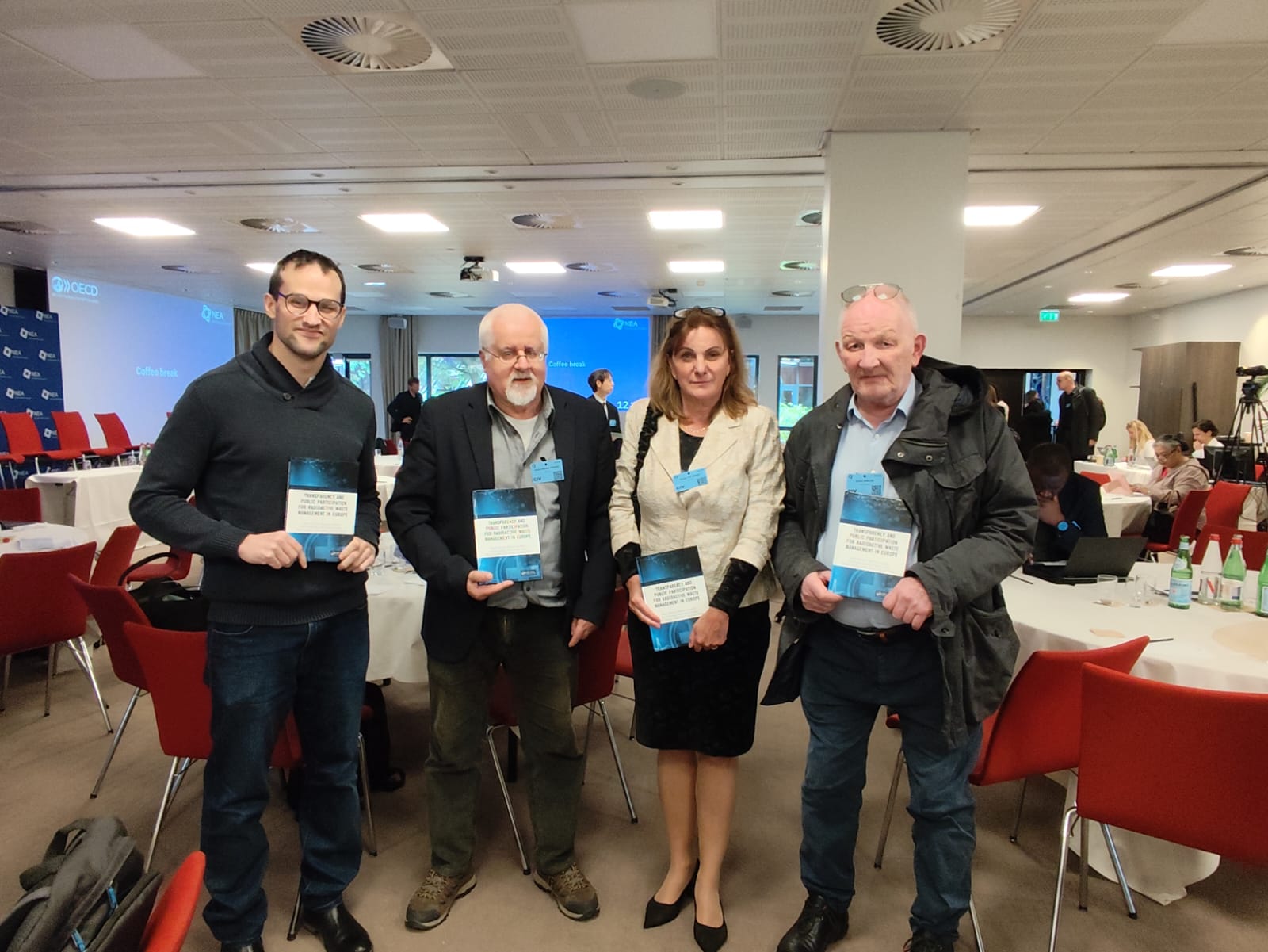
Some members of NTW have collectively published a book, on Transparency and Public Participation for Radioactive Waste Management in Europe investigating how the pillars of the Aarhus Convention, and a broader understanding of transparency by Civil Society (CS), can be transposed into Radioactive Waste Management (RWM), particularly in the establishment of Radioactive Waste (RW) facilities in different national contexts.
With an analysis of nine national cases from Europe, the book provides the results of the investigations, including comments, suggestions, questions, and other observations, collected in interaction with other EURAD-1 participants from civil society. It discusses the feedback provided within a questionnaire completed by ROUTES members for the development of national programmes on radioactive waste management submitted to the waste directive, based on effective access to information, public participation, justice, resources, and transparency.

The book will interest nuclear energy policymakers, government employees, and radioactive waste management facility operators. It will also aid researchers and academics investigating public perception and facility siting considerations.
Rolling stewardship in radioactive waste management
In the frame of the EU joint programme on radioactive waste management EURAD-1, the NTW members involved, together with other civil society members and EURAD participants, addressed aspects of rolling stewardship in radioactive waste management in the context of research and fruitful Interactions with Civil Society (ICS) methodology.
This helped in developing the following outputs within the 2 “strategic studies” work packages in which NTW was participating:
- UMAN work package where a presentation of rolling stewardship with regard to human uncertainties:
➡️ ICS workshop Ljubljana intergenerational stewardship culture final
and various drawings from different authors to have visual representations of the concept:
➡️Visual representations of rolling stewardship - ROUTES work package where the section 6.4 of the deliverable D9.18 was dedicated to Rolling Stewardship which can be described as a strong version of Long-Term Stewardship (LTS) of Radioactive Waste:
➡️ https://www.ejp-eurad.eu/publications/eurad-d918-implementation-routes-action-plan-third-phase
In parallel, NTW also launched a working group on this topic in which several presentations have been made by knowledgeable speakers from various backgrounds and with complementary knowledge such as Robert Del Tredici, Dr. Gordon Edwards, Marcos Buser, Reinhard Uberhost or Maryna Surkova. For NTW, Niels Henrik Hooge and Gilles Hériard-Dubreuil also provided some inputs.
The following presentations proposed in this working group are also available on NTW’s You Tube channel:
- Webinar #1
“Human uncertainties relevant to the safety associated with radioactive waste management and Rolling Stewardship”
by Niels Henrik Hooge Master of Laws and Master of Arts in Philosophy. Interested in environmental and sustainability for a long time he has manifested itself in activism, cooperation with green NGOs in Denmark and abroad, as well as in many types of writing. In addition to editorial staff work in Danish environmental magazines, he has published several books, including most recently the novel “Kosova” (2016) and the poetry collections “Grøn nation” (Green Nation, 2015), “Miljødigte” (Environmental Poems, 2018) and “Miljødigte 2” (Environmental Poems 2, 2019).
“The origin and evolution of the concept of Rolling Stewardship”
by Ph.D. in Mathematics and Master of Arts in English Literature, Gordon Edwards, who has been a Professor of Mathematics and Science during all his career during which he did many publications in that field but not only. From 1970 to 1974, he was the editor of Survival magazine. In 1975 he co-founded the Canadian Coalition for Nuclear Responsibility and has been its president since 1978. Edwards has worked widely as a consultant on nuclear issues and has been qualified as a nuclear expert by courts in Canada and elsewhere. - Webinar #2 – part 1
Webinar #2 – part 2
“History of disposal projects and need for stewardship”
by Marcos Buser, a geologist with a degree from the Swiss Federal Institute of Technology (ETH) in Zurich, also consultant and expert who has been active for more than four decades in the management of industrial and radioactive waste projects, and a former member of several scientific commissions for the Swiss government, including the Swiss Federal Commission for Nuclear Safety. He was a member of the StocaMine steering committee. - Webinar #3
“An Introduction to Safety Culture – a possible resource for Rolling Stewardship of Radioactive Waste Management ?”
by Gilles Hériard Dubreuil, born in 1957, has a background in mathematics and human sciences (sociology, ethics, risk management). From 1982 to 1990, he worked for various consulting firms, then for Mutadis from 1991 onwards, developing research and consultancy activities in the fields of governance of high-risk activities and sustainable development, as well as in the design and testing of democratic governance systems at local, national and international levels.
“Rolling Stewardship – Safety Culture ; a regulatory perspective”
by Maryna Surkova a professional at the Federal Agency for Nuclear Control (FANC) in Belgium where she oversees nuclear safety and regulatory affairs within the Ghent metropolitan area. Maryna holds qualifications from the SCK CEN Academy for Nuclear Science and Technology. With a strong technical and regulatory background, she ensures compliance with national and international nuclear standards. Based in Belgium, she combines scientific expertise with policy implementation to support FANC’s mission.
In fact, NTW has envisioned connected topic related to the concept of Rolling Stewardship addressing challenges of the long-term engagement and maintenance in various way, such as “Intergenerational Stewardship” or “Long-term Stewardship” for instance. This work is meant to be continued within the same platforms which were previously used such as the SITEX.network and EURAD but also with any interested partners such as researchers specialized in environmental stewardship or in radioactive waste management in the long term.
In order to help further research on this topic, Niels Henrik-Hooge, has developed a paper providing a synthetical overview of the different concepts and perspectives related to radioactive waste management in the long-term such as “Intergenerational Stewardship culture”, “Rolling stewardship” or “Long-term Stewardship”: ➡️ Rolling stewardship and management of radioactive waste in the long-term ⬅️
This is why, a « stewardship culture » could be defined as a democratic and sustainable way to inclusively and pluralistically roll accountability and management across generations in the long term, in the spirit of the Aarhus Convention.
Radiation Protection Research – PIANOFORTE White Paper
PIANOFORTE is a European Partnership for Radiation Protection Research ☢️ contributing to improve the protection of the public, workers, patients and the environment from environmental, occupational and medical exposure to ionizing radiation.
It brings together 58 partners representing 22 European Union countries 🇪🇺 as well as the United Kingdom 🇬🇧and Norway 🇳🇴, and is coordinated by the French Autorité de Sûreté Nucléaire et de Radioprotection (ASNR) and co-financed by the European Union’s EURATOM program and the governments of the participating countries.
Through the research activities carried out within its framework, PIANOFORTE contributes to the implementation of European policies such as the European plan to combat cancer , the green pact for growth, and the implementation of the roadmap for reducing industrial and natural risks.
PIANOFORTE has just released a White Paper on “The Vital Role of Radiation Protection Research in Europe’s Future”:
Nuclear safety put to the Common test
In this article named, Nuclear safety and the Common, the authors, Gilles Hériard-Dubreuil and Julien Dewoghelaëre have provided a study on the notion of Common in relation of the nuclear safety in the French context. This article has been published with other articles on the notion of Common in the frame of a collective publication named “Dynamiques du Commun” (2021).
The introduction is reported below, while the full article is accessible there.
“Civil nuclear power generation activities are associated with very significant risks for humans and the biosphere. They also give rise to the production of dangerous radioactive materials, the presence of which must be envisaged for very long periods, and even infinite from the perspective of a human life itself.
From the very beginning, these activities have been the subject of strong political opposition from various groups within the populations of the producing countries and at international level. These confrontations involve pro-nuclear and anti-nuclear players, with a relatively indifferent public in the background, with the exception of periods of concern caused by the Chernobyl and Fukushima nuclear accidents. The opposition to these activities is based on the rejection of exposure to nuclear risks and their potential consequences at national and international level. The possibility of safe management of nuclear activity is a central object of controversy.
This contestation also concerns the technical, economic and social relevance of the choice of nuclear power generation, particularly in the current context of energy transition. Nuclear activities are facing a deterioration in their economic model, with a sharp rise in productivity requirements, combined with stricter European regulations restricting state aid and increased financial and economic transparency5, which in Europe is limiting the public support from which this activity has historically benefited.
The European context today is characterised by a wide disparity in energy choices, particularly where nuclear power is concerned. Only some European countries are involved in nuclear production, often in connection with military nuclear activities. Some of these countries have decided to withdraw from nuclear power at different times. They are planning a transition to other forms of energy production. But phasing out nuclear power does not mean phasing out nuclear safety, which remains a long-term or even very long-term issue for these countries. Ultimately, nuclear safety is an issue for all European countries. Indeed, serious nuclear accidents are always of a cross-border nature and the management of radioactive materials, although a national responsibility, remains a common safety issue for Europe’s neighbours.
Nuclear safety requires a wide range of technical, scientific, economic, social and political conditions to be met. As a result, safety is highly vulnerable to changes in the economic climate affecting the industry, in an unstable international context that differs in many respects from that which prevailed in the second half of the last century. A systemic deterioration6 in nuclear safety and security conditions could result from these profound changes in the national and international context. The ability of dyadic governance between State and Market to support nuclear safety requirements in an unfavourable economic climate is questionable. At European level, this situation is a new factor which tends to make nuclear safety a common issue for the peoples of Europe.
A study of the governance of nuclear activities since their inception reveals a profound evolution, the most recent stage of which, in Europe, is based on the societal recognition of nuclear safety as a common problem (with, in particular, an increase in the power of the European institutions on this issue), over and above the diverse positions of the Member States with regard to nuclear energy. Favoured in particular by the Aarhus Convention (1998), this development has the seeds of a gradual recomposition of nuclear safety governance, with the institutional components of safety interacting in a Common dynamic: 1) the operator (the Market), 2) the State and its institutions and 3) civil society. This move towards triadic governance could ultimately bring about a political rebalancing of the negotiation processes that govern the establishment of nuclear safety rules and standards.”
Nuclear Waste Management in the EU: Joint Project Report
Nuclear Waste Management in the EU: Joint Project Report –
Update 2023
2023-07-31
Nuclear waste from NPPs remains an unsolved and highly dangerous problem, as spent fuel must remain isolated from the environment for a million years.
In an attempt to solve the nuclear waste problem, an EU-wide directive was introduced in 2011, the “Council Directive 2011/70/Euratom establishing a Community framework for the responsible and safe management of spent fuel and radioactive waste”. This directive tried to force EU member states to address the issue seriously, after this had been neglected for decades – thus immediately proving that nuclear waste has never been effectively dealt with.
The Joint Project has been active for years in monitoring the implementation of the Nuclear Waste Directive, especially with regard to transparency and opportunities for public participation.
The 2023 update of our report is available here.
Transparency and Radioactive Waste Management in 2023 (Webinar series)
Nuclear Transparency Watch (NTW) is a European citizen network of organisations and members dedicated to giving access to information on nuclear safety issues, Radioactive Waste (RW) being an important issue of short and long term safety, NTW is following this subject since its beginnings.
One major contribution of NTW to this topic is the “Broad Framework for Effective Public Information and Participation in Environmental Decision-making in Radioactive Waste Management” or BEPPER report (2015) which is the extended report made by the same authors for the European Commission on transparency within radioactive waste management.
🔎 NTW members are continuously working nationally (with local partners) as well as internationally (under the frame of the European Commission with the EURAD research program) on this topic. Therefore, in order to update and share information a webinar series was launched in 2023 to report on 9 national cases presented by NGOs representatives from each country.
CALL for a post-Ukraine nuclear stress test process for all European nuclear power stations
After Russia’s shocking invasion of Ukraine last year, the nuclear risk has come back to the forefront in a worrying way.
Indeed, the day after the invasion, on 25 February 2022, the armies of the Russian Federation attacked the Chornobyl power station and a few days later the largest power station in Europe: Zaporizhzhia
👉 find here ENSREG statement
WEBINAR: Euratom Reform and Options for EU Treaty – Change in the Energy Field #1
Initiation of a constitutional amendment procedure in the European Union seems increasingly likely due to the positions on treaty reform of the European Parliament, the European Commission, France and Germany as well as other EU member states. The aim of the webinar is to discuss the need of reform or abolishment of the Euratom Treaty and how EU’s constitutional framework could look like if it included mechanisms for an efficient and timely green energy transition.
Time: February 20th, 3-4 PM, CET.
EP&R: results from NTW’s participation in a European Project
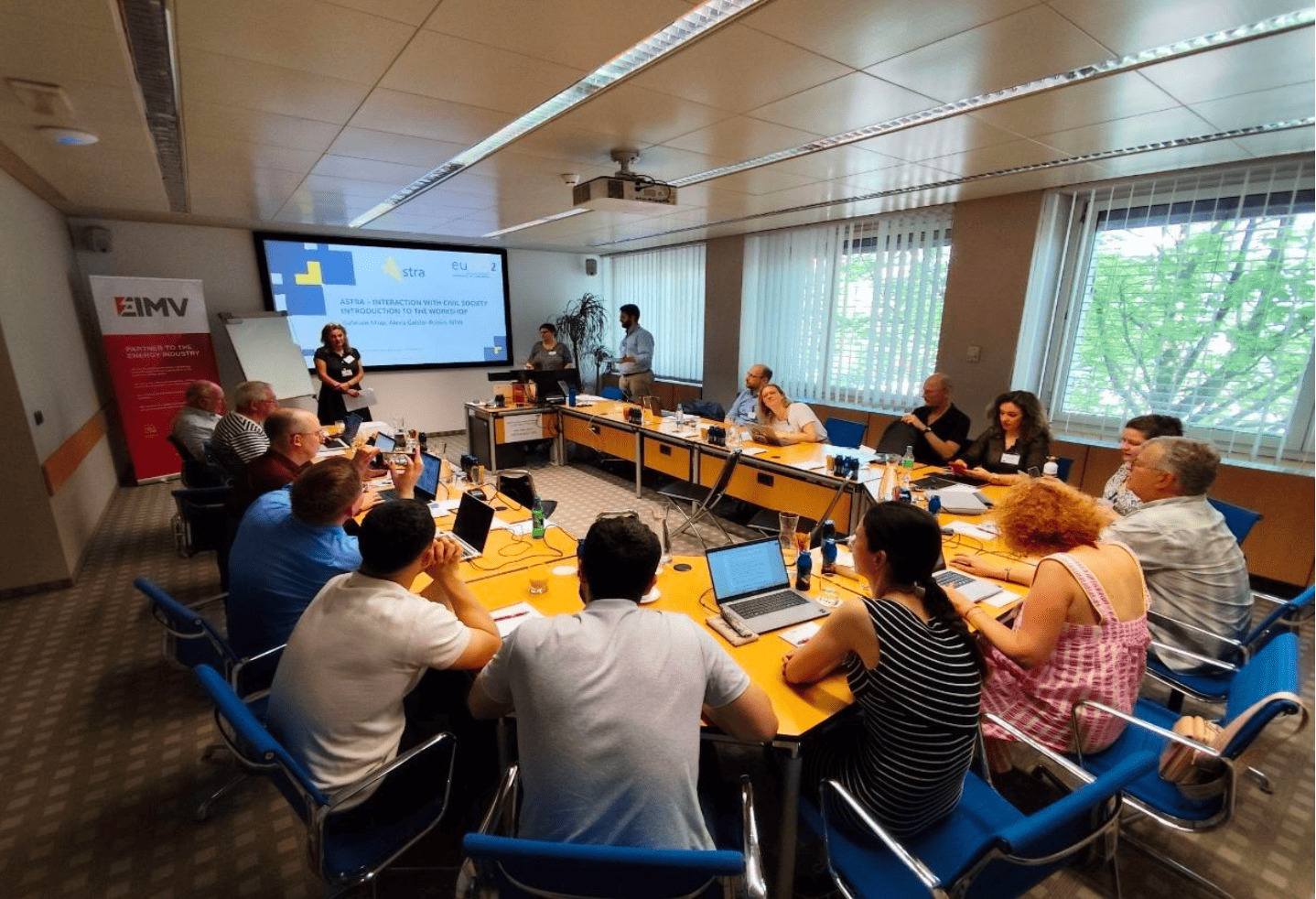
Here are the presentations given by NTW to the participants of this EP&R European Project. The goal was to share NTW’s results and views while considering the process and practices established towards Civil Society. Those presentations were given under the frame of two workshops.
Tanja Perko, Nadja Zeleznik (NTW Chairwoman) and Peter Mihok (NTW member) have translated recent social science and humanities research (2020–2025) into evidence-based recommendations for policymakers managing societal aspects of radon and naturally occurring radioactive materials (NORM).
By bridging the gap between researchers and decision-makers, this work ensures that radon and NORM policies are informed by robust evidence, context-sensitive insights, and tested approaches.
Full paper -> Click here
#newpublication #scientificpaper #radon #NORM #SSH #policy #decisionmaking