Introduction
EURAD-2 is the European joint programme on radioactive waste management, following on from EURAD-1 (2019-2024). It brings together a consortium made up of WMOs, TSOs and research entities, along with affiliated entities, with the aim of strengthening European scientific and technical collaboration across all stages of radioactive waste management.
ASTRA (Alternatives RWM Strategies) is one of the programme’s work packages. It focuses on analysing the feasibility of and challenges facing alternative waste management strategies, particularly for smaller national programmes (SIMS), including extending the lifetime of temporary storage, deep borehole disposal, and waste bearing naturally occurring long-lived radionuclides.
As part of EURAD-2, Nuclear Transparency Watch (NTW) organises the « Interaction with Civil Society » (ICS) workshops, designed to bring civil society into dialogue with the programme’s other actors on the various strategic studies, including ASTRA.
ASTRA Workshop
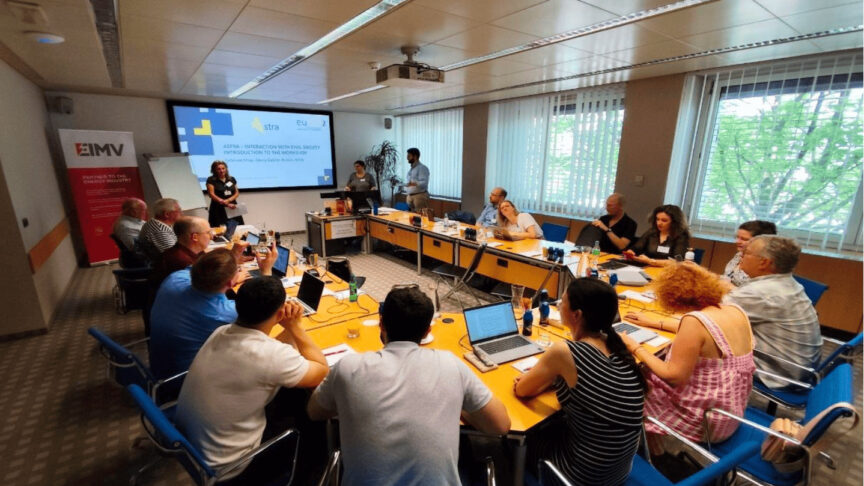
The ASTRA 3+1 workshop for interaction of civil society with the three technical colleges took place from 27 to 29 May 2026 in Ljubljana. It was hosted by the ASTRA task 6 team, Nuclear Transparency Watch (NTW) and EIMV at the EIMV premises.
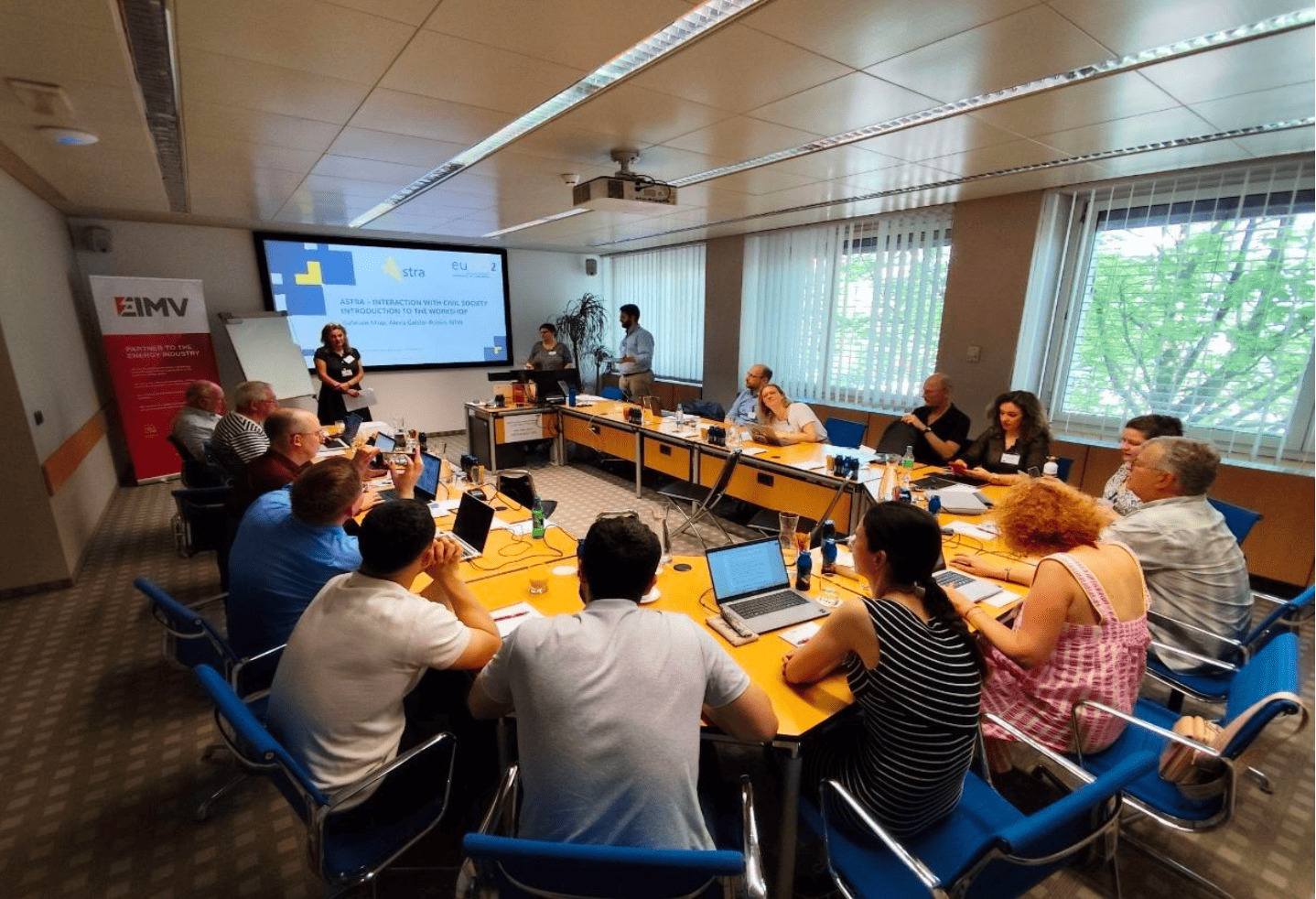
21 participants were on site, and 10 online. The participants came from all technical colleges, from end-users, and civil society experts from ASTRA and from the civil society larger group.
The first day focused on challenging waste. After an informative overview presentation by Nadja Železnik from EIMV, Alexis Geisler-Roblin reflected on challenging waste in the Public Debate in France. Then civil society experts from NTW presented case studies from their countries: Petar Kardzhilov reported on the legacy of 47 uranium mines in Bulgaria. József Kobor informed about the closed uranium mine in Pécs/Hungary and on some issues of the final repository search. Dmitry Gorchakov focused on the Soviet nuclear legacy in Northern Russia. Mario Crnković informed about transboundary problems between Bosnia & Hercegovina and Croatia in the site selection process for the Croatian LILW repository. Michal Daniška explained about the intransparent incineration of radioactive waste from Italian NPP Caorso in Slovakia.
All of these case studies raised problems on challenging waste and problems on lacking transparency and insufficient public participation. The workshop participants appreciated the possibility to get information and have enough time for questions and discussion on these issue.
The second day started with a short session on long-term interim storage. Yevheniia Kudriashova from SSTC presented an overview on key issues on long-term interim storage based on ASTRA task 3 outcomes. Gabriele Mraz from NTW Civil introduced society’s perspectives on the long-term interim storage.
ASTRA task 4 focused on deep borehole disposals. James Begg from Galson Sciences Ltd. made an introductory presentation to provide basic information and ASTRA outcomes. Johan Swahn from NTW focused on aspects of deep borehole disposal that are of special interest to civil society.
After a lunch break, the last session of the workshop dealt with long-term governance and intergenerational stewardship culture. Niels Henrik Hooge from NTW started with an overview presentation on intergenerational stewardship culture including long-term stewardship and rolling stewardship. After him, for the first time in EURAD-2, students from France that were no EURAD-2 members, presented their thoughts on intergenerational considerations. A world café interactive working session followed these inputs, discussion on three topics:
- Who should develop an intergenerational stewardship culture model? How could it be developed? What could be the role of the public?
- What is the role of reversability, retrievability and recoverability in an intergenerational stewardship culture? What could be the role of the public in it?
- Should a final repository be marked after closure and decommissioning of the surface facility? What about a deep borehole? How shall key information on the repositories be kept and updated in the long-term? What could be the role of the public in it?
The ASTRA 3+1 workshop was a so-called civil society third wing event. This means that not only civil society experts and members of the civil society larger group participated, but also students from both Ljubljana university and the above mentioned students from France were invited. With the students from Ljubljana the ASTRA task 6 team had a dedicated PEP session before start of the workshop.
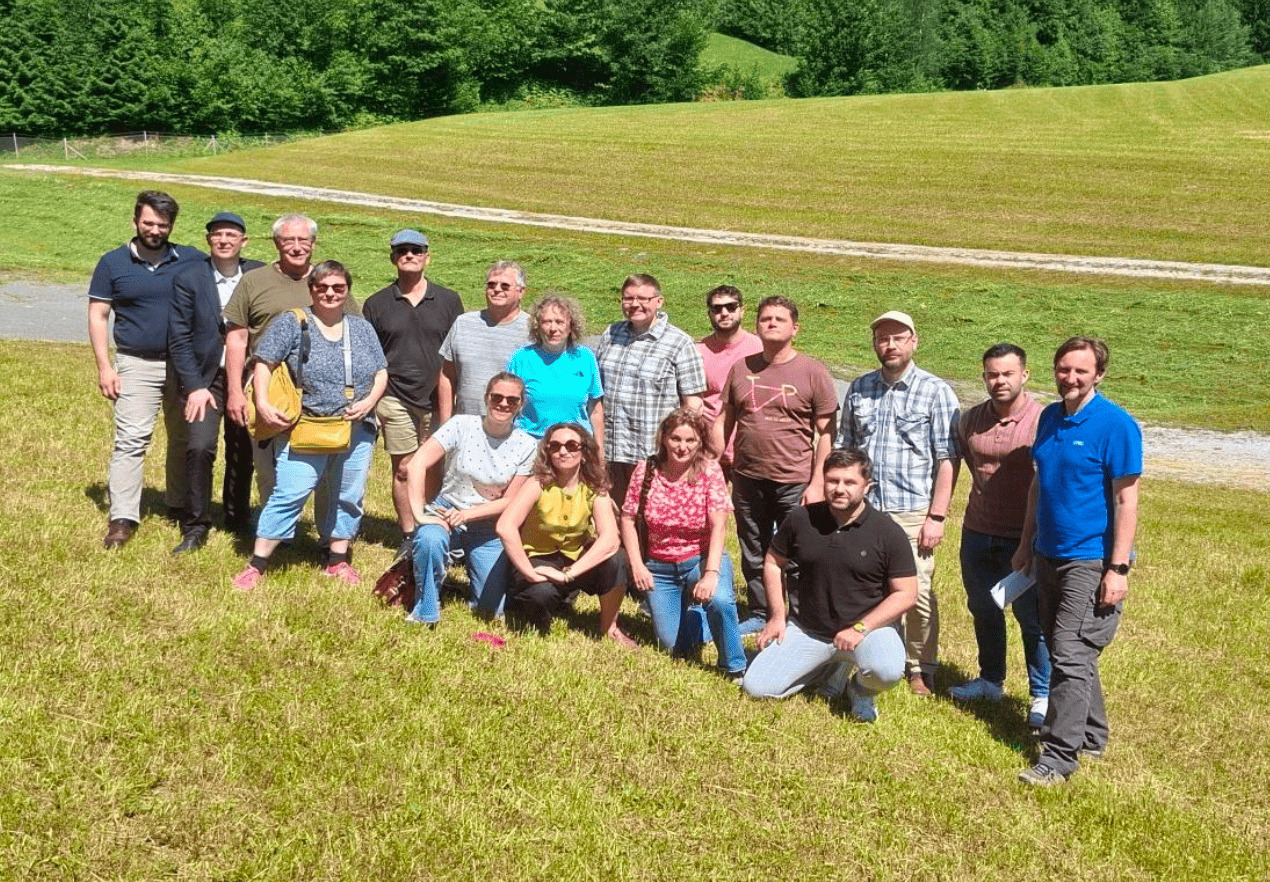
On the last day of the workshop, we had a technical visit to the two disposals at the site of the closed uranium mine Rudnik Žirovski vrh. One of these is the Jazbec mining tailings landfill and the other is the Boršt hydrometallurgical tailings landfill. Both are environmentally rehabilitated, but the Boršt side has a landslide problem. Matej Rupret from ARAO gave a presentation and showed us both disposal sites.
The workshop got very good feedback, participants liked having enough time for questions and discussions.
Thanks to all contributors and EIMV for hosting, and ARAO for the technical visit!
Detailled documentation (“milestone 81”) of this workshop will present outcomes of the interaction of civil society with the technical partners in the ASTRA work package. The documentation paper will be published here in October 2026.
Here is the link to the PowerPoint presentations :
Marja Vuorio : ASTRA for interactions with civil society Ljubljana 05 2026
Nadja Zeleznik_ASTRA challenging waste
Joseph Kobor_Green Circle Pécs
Alexis Geisler-Roblin : Reflection on challenging waste in the Public Debate in France
Gabriele Mraz : ASTRA Long-term interim storage
Johan Swahn : A tale of two DBD stories Johan Swahn : ASTRA DBD and civil society Johan Swahn
Johan Swahn : ASTRA Reversibility retrievability recoverability
Niels Henrik Hooge : long presentation on intergenerational stewardship culture
Vous devez être connecté pour poster un commentaire.